Michael McCourt
Angela's AshesMichael McCourt is Frank McCourt’s younger brother, whose arrival is wrapped in the family’s story of the Angel on the Seventh Step and whose childhood is marked by an unusually generous instinct to care for others. In the McCourt household, where a little food, warmth, or money can become a crisis, Michael repeatedly gives what he has to people and animals in greater need. His practical kindness and loyalty to Frank offer a counterpoint to the family’s instability, even as his own childhood is shaped by it.
Identity and Introduction
Michael enters the family after Margaret and the twins. His father says the angel who brought those babies has returned with another brother, found on the seventh stair. The explanation becomes a piece of family lore that Michael’s arrival helps extend: the stairs are both a literal feature of the home and a way the children are taught to imagine how a new baby comes into the family. When Frank asks which step counts, their father says angels descend from above, not up from kitchens that flood from October to April. Frank counts down from the top to find the seventh.
The wonder of the story quickly meets the material facts of Michael’s infancy. He has a cold and can barely breathe on a Sunday, when the Dispensary for the poor is closed. Their mother fears that he is struggling for air; she tries to clear his nostrils with rolled paper but is afraid to push it too far. Their father clears the obstruction by sucking it from Michael’s nose and spitting it into the fire. Michael cries loudly, begins breathing, and kicks his legs. In the episode, the family’s angel story coexists with precarious access to medical care and a father’s improvised intervention.
Childhood and Care for Others
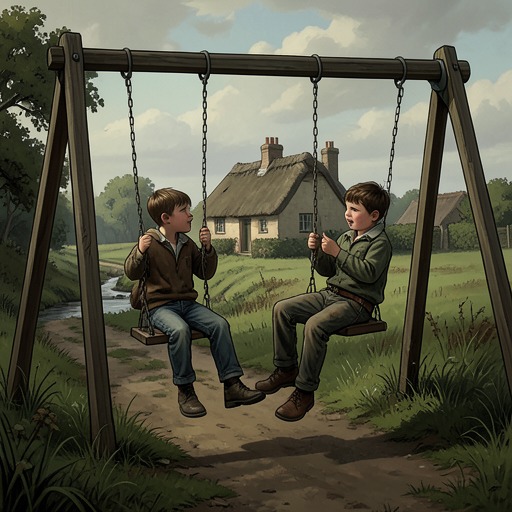
As Michael grows, his response to need is characteristically direct: he brings vulnerable people and animals home, even when the family can scarcely feed itself. He brings stray dogs, including a blind greyhound that children had been tormenting in the park. Michael fights the children off, carries the dog home, and offers it his own supper. When his mother says there is hardly a slice of bread for the family, he insists that the dog can have his bread. The dog dies beside him in bed. Michael refuses to go to school, digs a grave outside where the stable used to be, and asks the family to help bury it and say prayers. He argues that the greyhound must have been Catholic because he held it in his arms. His grief persuades their mother to let the children stay home and help with the burial.
The same impulse extends to homeless and elderly people. Although Michael is only six, he brings old men into the house, gets the fire going, and gives them tea. If he has no bread to offer, he knocks on neighbors’ doors to ask for some. The kindness strains an already scarce household: the visitors drink from his mother’s favorite mug, and one leaves the family with lice. His mother eventually tells him not to bring any more old men home. The limit does not erase his generosity; rather, it makes visible the conflict between his instinct to shelter others and a home with too little food, space, and protection to absorb their needs.
Michael’s tenderness also appears in his care for Frank. After Frank leaves Laman Griffin’s house, Michael comes to him with warm tea in a milk bottle and two pieces of fried bread. Frank insists he can manage without them and tells Michael to say so at home, but he gives him an apple and invites him to return every other day. The small exchange reverses their usual positions: Michael is the one bringing nourishment, while Frank uses the apple and the promise of more to reassure him and ease his tears.
Family and Separation
Michael’s early childhood unfolds amid recurring hardship. A new baby entitles the family to a few extra shillings in relief, but their mother says it is not enough and must seek food assistance. Later, when their father receives five pounds intended for the new baby and goes into South’s pub, their mother sends Frank and Malachy to find him. She wants them to tell the men in the pub that the money is for the child, while the baby cries upstairs for milk. The boys cannot find their father. Michael’s infancy is thus bound to the household’s dependence on money that may fail to reach the children for whom it is meant.
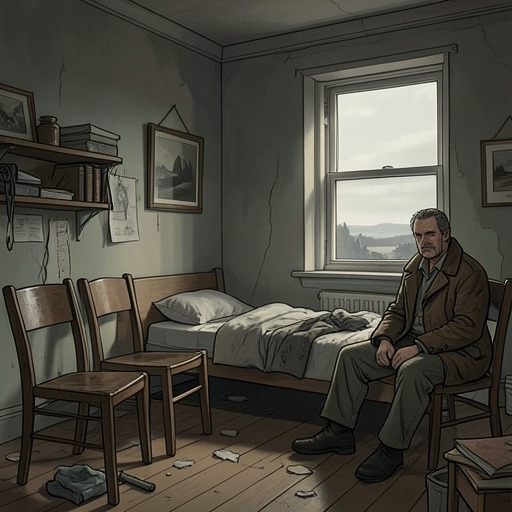
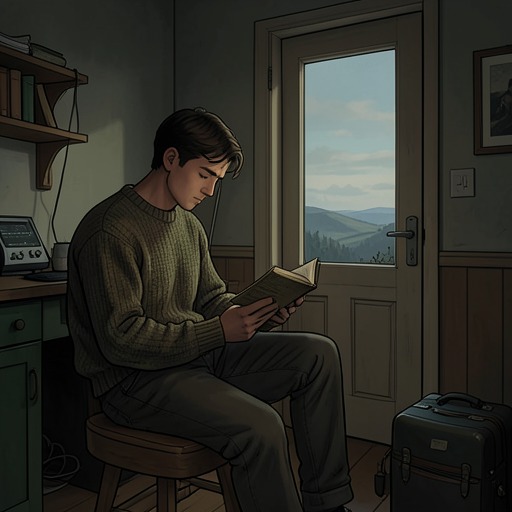
His parents’ departures and absences shape the brothers’ lives in different ways. Their father leaves for factory work in Coventry after telling Frank to become the man of the house; one money order arrives, but the promised weekly remittances stop. When Frank later leaves for work, Michael is still too young to speak properly and is the only younger brother left with him at home. Michael pleads with Frank not to leave, saying that Malachy is away in the army and that without Frank he has no big brother, only Alphie, who is not yet four. Frank cannot bring himself to return to Laman Griffin’s house, but Michael’s tears cause him visible pain. He watches Michael go up the lane with the sole of his shoe broken and clacking on the pavement, and imagines the shoes, meals, and home he hopes one day to provide for him.
Frank and Michael’s Shared Hopes
Michael’s bond with Frank persists after Frank begins earning wages. On the night Frank receives his first pound, he is tempted to spend it on the cinema and a restaurant meal. Michael calls to him from across the street, hungry and asking whether he can go to an old man known as The Abbot for bread and stay there instead of walking all the way to Laman Griffin’s. Frank tells him not to worry about bread. He takes Michael for fish and chips and lemonade, then to see Yankee Doodle Dandy, where they eat chocolate, before they have tea and buns. They sing and dance like James Cagney on the way to The Abbot’s.
For Michael, the evening makes America vivid as a place where people seem to do nothing but sing and dance. Half asleep, he says he will go there one day and asks Frank to help him. Frank agrees, then thinks of saving his wages for his own passage rather than spending them. The scene joins shared pleasure to separation: Frank can give his brother one celebratory night, but the larger hope of leaving Limerick depends on the money he must keep.
When Frank tells their mother he will sail for America on the Irish Oak, Michael asks whether the whole family will go someday. Frank promises that they will. Michael’s question and Frank’s assurance leave the future open, but the promise gathers the brothers’ recurring wishes—to escape hunger, to remain connected, and to imagine a life beyond their present circumstances—into a final expression of their bond.